News
Green City or Grey Ambition? How Kuala Lumpur's Climate Push Stacks Up Against Bangkok and Bogotá
KL has big sustainability targets on paper, but the gap between policy and pavement tells a more complicated story.
4 min read
Updated 5 h ago
News
KL has big sustainability targets on paper, but the gap between policy and pavement tells a more complicated story.
4 min read
Updated 5 h ago
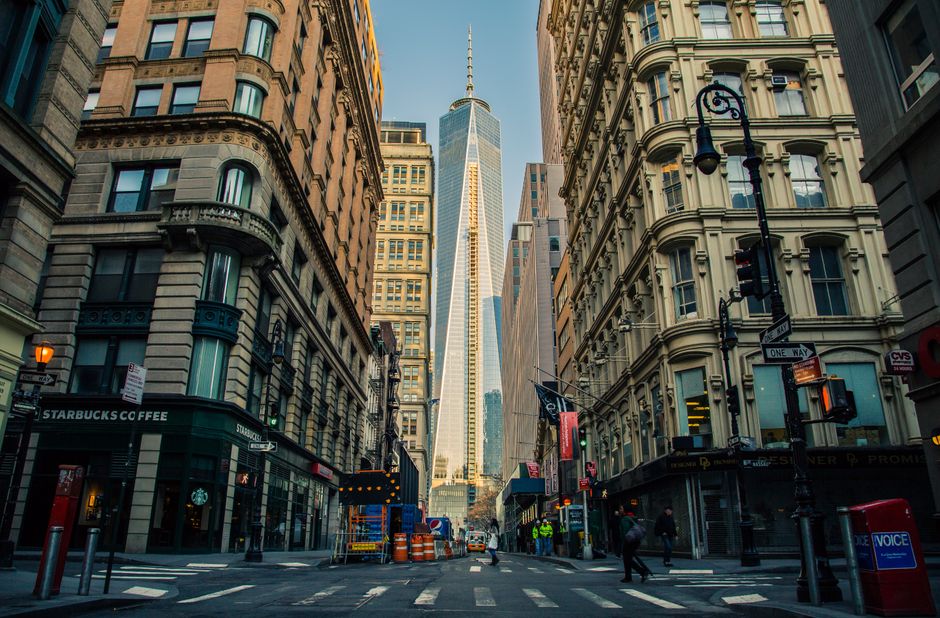
Kuala Lumpur generates roughly 3,800 tonnes of solid waste every single day. That number, drawn from Alam Flora's own operational data, sits at the centre of an uncomfortable question city planners cannot easily sidestep: for a capital that bills itself as a digital economy hub and aspires to ASEAN leadership, is KL actually cleaning up its act fast enough?
The question is sharper now because Europe is burying heat-death victims — France recorded 2,025 excess deaths at the peak of its recent heatwave — and global attention on urban climate vulnerability has rarely been more intense. For tropical cities like Kuala Lumpur, Bangkok and Bogotá, the pressure is different but no less urgent. Flooding, urban heat islands and air quality are the front-line threats, not snowstorms or wildfires, and the infrastructure responses required are expensive, slow and politically awkward when governments are simultaneously arguing about petrol subsidies.
Kuala Lumpur City Hall, known by its Malay acronym DBKL, formally committed to a Low Carbon Society Blueprint targeting a 70 percent reduction in carbon intensity per GDP unit by 2030, using 2005 as the baseline. That pledge sits inside Malaysia's broader updated Nationally Determined Contribution submitted under the Paris Agreement. On paper, it is ambitious. On the ground at Jalan Parlimen or along the Klang River corridor, the progress is patchy.
The Klang River rejuvenation project, which DBKL and the federal Department of Irrigation and Drainage have pushed in phases since the early 2010s, has transformed stretches between Masjid India and Chow Kit from open sewers into walkable riverfront. That is a genuine win, and one Bangkok's Chao Phraya corridor managers have taken note of. But Bangkok, with its BMA Green Roof programme launched in 2023 and covering over 140 public buildings by mid-2025, has moved faster on urban greening of existing infrastructure. KL's equivalent Inisiatif Bumbung Hijau remains mostly a pilot confined to selected Kuala Lumpur City Hall buildings in Cheras and Wangsa Maju.
Bogotá offers a more striking contrast on public transport emissions. The Colombian capital's TransMilenio BRT network converted 1,485 buses to electric or hybrid operation between 2022 and 2025, cutting particulate emissions on Avenida Caracas by a measurable 18 percent according to the city's mobility secretariat. Kuala Lumpur's Rapid KL bus fleet has introduced electric models — 50 units were deployed on the Klang Valley network in 2024 — but the rollout covers less than four percent of total fleet size. With MRT3 Circle Line construction now visibly underway around Jalan Duta and Damansara, there is structural momentum, but the city still runs more than 1.2 million private vehicles daily, a figure that keeps climbing.
The Anwar Ibrahim administration's subsidy rationalisation, which trimmed RON95 petrol subsidies for higher-income earners starting in late 2024, was partly framed as an environmental nudge. Economists at Universiti Malaya's Institute of China Studies pointed out that without parallel investment in affordable, reliable public transit alternatives, the policy mostly adds cost of living pressure rather than shifting commuter behaviour. A monthly unlimited RapidKL pass costs RM100 — reasonable by regional standards — but frequency gaps on feeder bus routes in Ampang and Kepong blunt any modal shift incentive.
DBKL is expected to release its revised Kuala Lumpur Structure Plan 2040 addendum in the final quarter of 2026, which will for the first time embed binding green building requirements for private developments above a certain gross floor area in the city centre. The Real Estate and Housing Developers' Association Malaysia has already flagged concerns about compliance costs amid a housing affordability crunch in the Klang Valley.
For residents, the practical near-term shifts are modest but trackable. The KLCC Park's urban cooling study, run jointly with Universiti Teknologi Malaysia since January 2026, is testing reflective paving materials across 0.4 hectares near the Suria KLCC entrance. Results are due by October. Meanwhile, community groups along Jalan Ipoh have begun their own micro-nursery networks, planting some 6,000 trees under the Roots of KL programme since March.
None of this is transformational yet. What KL needs — and what Bangkok and Bogotá both show is achievable — is speed, not just intention.
News
News
News
News
About this article
Published by The Daily Kuala Lumpur
Spread the word
Daily brief
Free, in your inbox before 7am. Weekdays.
The Daily Network — local news across Australia