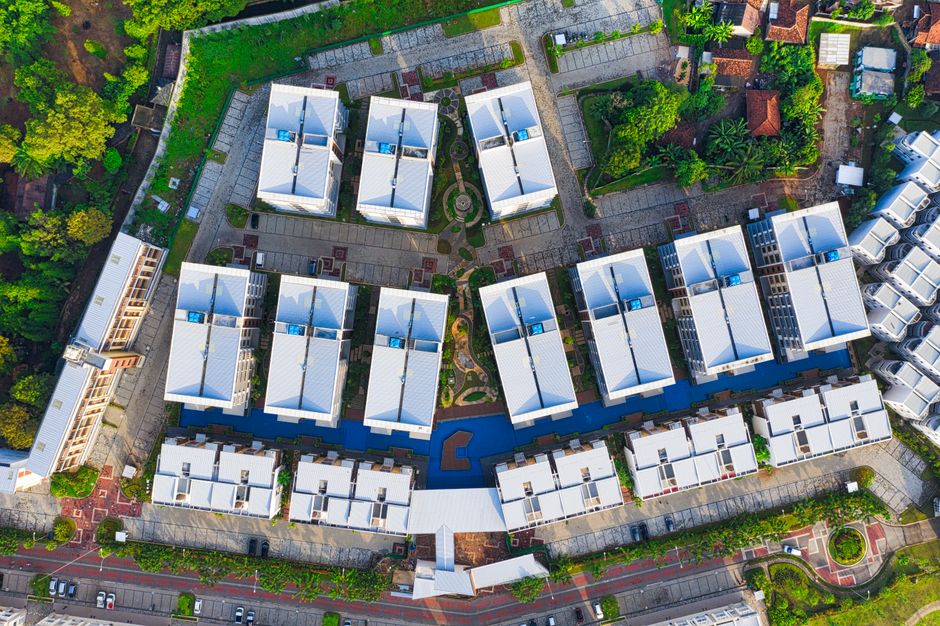
Walk through any major property listing platform serving the Klang Valley and the problem announces itself quickly. The same aerial photograph of Chow Kit rowhouses appears on listings in Setapak. A drone shot clearly taken above Bangsar shows up labelled as a Kepong freehold unit. A render of a Bukit Jalil condominium lobby has been circulating, with minor colour adjustments, since at least 2019. The practice of duplicate and recycled image use in Malaysian property documentation is not new, but pressure from the Anwar Ibrahim administration's housing affordability agenda has pushed it to the centre of a genuine policy headache.
The timing matters because the government is in the middle of a subsidy rationalisation debate that touches directly on the cost of homeownership. The National Housing Department, known as JPN, and the Employees Provident Fund's housing withdrawal schemes have both expanded their digital verification requirements since early 2025. When the images attached to property records cannot be independently traced or authenticated, valuation disputes multiply and loan approvals slow. In a market where the median house price in the Klang Valley crossed RM550,000 in 2024 according to the National Property Information Centre's annual report, getting the documentation right is no longer an administrative nicety.
A Problem That Predates the Portal Era
The roots go back further than the current wave of PropTech platforms. During the rapid condo construction boom along the Ampang corridor and around Sri Petaling in the late 2000s and early 2010s, developers routinely supplied a single bank of marketing images to multiple agents. Those images, often professionally shot at one showcase unit, were filed with land offices, shared across PropertyGuru and iProperty listings, and embedded in loan application documents, all simultaneously, all attached to different unit numbers. No coordinated system existed to flag the duplication.
The Selangor and Federal Territory land authorities operated separate digital registries well into the 2010s. When the National Land Code was amended and e-conveyancing was phased in from 2017 onward, the legacy image data was migrated without systematic deduplication. Staff at DBKL's planning division have publicly acknowledged at various points over the years that image metadata standardisation was not part of the original digitisation brief, though no formal audit figure has been released.
By 2022, when the Malaysia Digital Economy Corporation began pushing its MyDigital Blueprint targets, the property sector was identified as one of twelve priority verticals for data integrity improvement. The blueprint set a 2025 deadline for core real estate datasets to meet a defined accuracy threshold. That deadline passed quietly, and the duplicate image problem persisted in both commercial and affordable housing categories.
What the Push for Affordable Housing Exposed
The Madani government's PR1MA and RumahWIP programme reviews, conducted through 2025, surfaced the issue in a new context. Audit teams cross-checking applications under the Rumah Mesra Rakyat scheme found that a meaningful share of project documentation submitted from contractors in the Gombak and Hulu Langat districts contained photographs that reverse-image search tools could trace to previous, unrelated projects. The government has not published a specific percentage figure from those internal reviews.
The practical consequence for ordinary buyers is real. A first-time purchaser relying on listing photographs to make an offer on a unit in Pandan Indah or Wangsa Maju has no reliable way to distinguish an authentic current photograph from a recycled image taken years earlier, possibly at a different property entirely. That information gap feeds directly into the cost-of-living anxiety that has dominated KL's economic conversation since late 2023.
The path forward sits with two institutions. The Lembaga Juruukur Bahan Malaysia and Bank Negara's financial consumer unit have both signalled interest in a joint image hashing protocol, essentially a technical standard that would attach a unique fingerprint to every property photograph at the point of submission. Whether a working system appears before the next wave of affordable housing launches under Budget 2027 will determine whether this long-accumulating problem finally gets a structural fix, or simply another cycle of the same recycled image.