culture
Six-Tiered Thean Hou Temple Dominates Kuala Lumpur's Robson Heights Skyline
A landmark of the city's Chinese community, with sweeping views from Robson Heights.
How we reported this
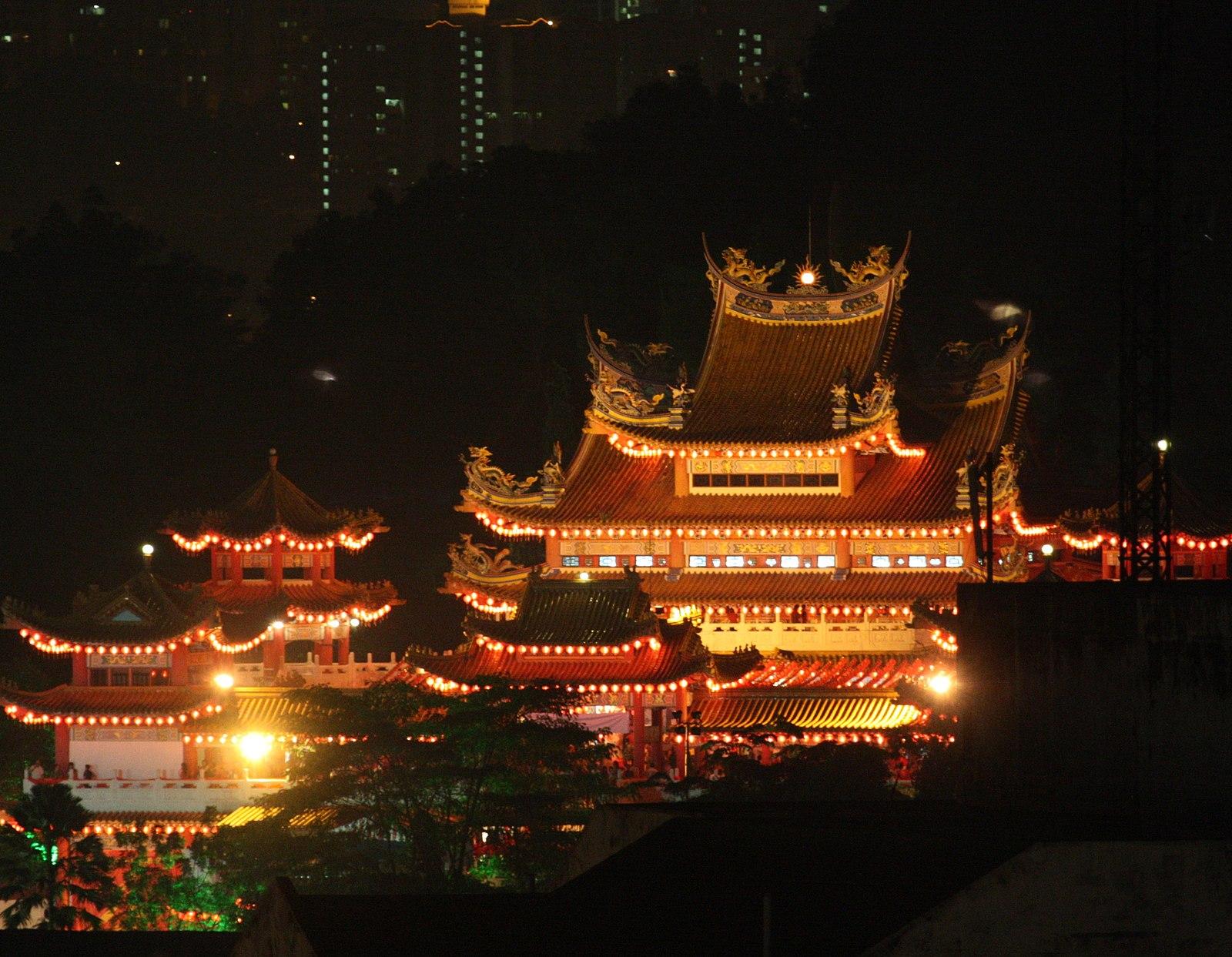
Thean Hou Temple is a temple dedicated to the Chinese sea goddess Mazu, located on Robson Heights in the Seputeh area of Kuala Lumpur. It overlooks Jalan Syed Putra and is known for its elevated setting, layered rooflines and detailed decoration. The temple is both a place of worship and a cultural landmark, so visitors should approach it respectfully rather than treating it only as a viewpoint.
The temple was built by the Hainanese community in Malaysia and is owned and run by the Selangor and Federal Territory Hainan Association. Its design brings together Buddhist, Taoist and Confucian elements. Deities venerated there include Mazu, Guanyin and Shui Wei Sheng Niang, giving the complex a religious and community history that is just as important as its architecture.
Thean Hou Temple is a major Chinese temple in Southeast Asia and has a strong presence on the hilltop. Its upper decks offer views across Kuala Lumpur, while the eaves carry close-up details including mosaic dragons and phoenixes. These features reward visitors who slow down and look carefully, especially after taking in the broad outline of the structure from outside.
The temple’s construction took place in the 1980s, and it was officially opened towards the end of that decade. The building’s history is closely linked to the community that created and maintains it. Festival celebrations such as Chinese New Year and Wesak Day continue to connect the temple with living religious and cultural practice, while the venue is also used for weddings.
A thoughtful visit can focus on the deities, the community story, the upper-deck views and the decoration along the eaves. Modest clothing is appropriate, and visitors should follow any notices about worship areas, photography and ceremonies. Because the temple is on elevated ground, comfortable shoes are useful, particularly for anyone planning to explore more than the main entrance level.
The view is especially effective as a quiet pause, but it remains secondary to the temple’s religious purpose and the community life held within its spaces.
Check current visitor information before travelling, especially if a festival or wedding matters to your plans. Allow time for the journey and for the weather when looking out across the city. Thean Hou Temple offers Kuala Lumpur a distinctive meeting point of faith, community, architecture and hillside views, with details that become more rewarding the longer you take to notice them.