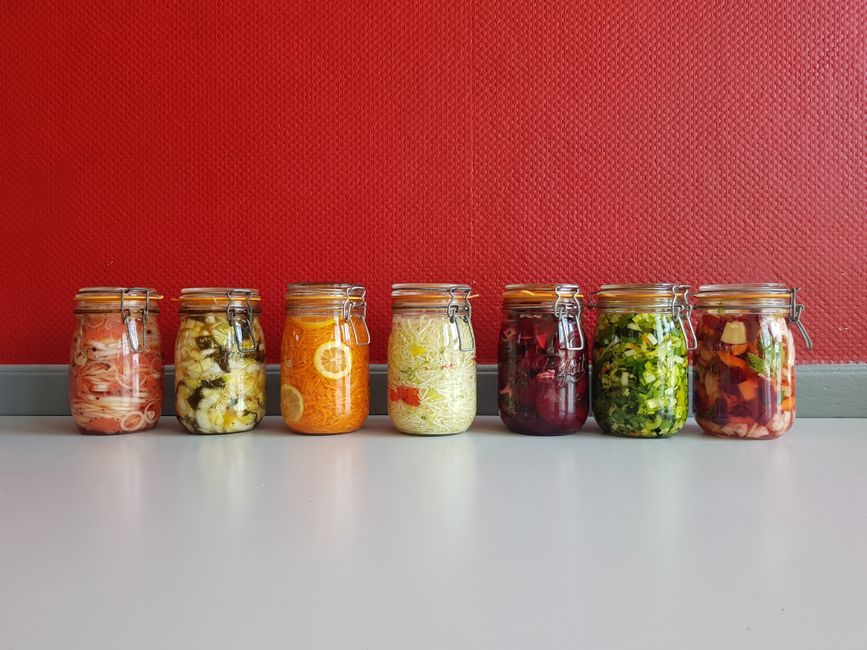
Fermented foods are having a moment in KL, but the truth is they never really left. Walk through Pasar Chow Kit on a Saturday morning and you'll pass tubs of tempeh, jars of budu, and whole shelves of cincalok — shrimp paste fermented with rice and salt — before you've even had breakfast. What's changed is that nutritionists and gastroenterologists are now pointing to these staples as serious tools for gut microbiome health, and a growing cohort of urban Malaysians is paying attention.
The timing matters. A 2024 report by the Malaysian Dietitians' Association flagged that fewer than 30 percent of adults in peninsular Malaysia meet the recommended daily fibre intake, and poor dietary diversity — a key driver of weakened gut flora — ranks among the top risk factors for metabolic disease locally. Against that backdrop, the fermented foods already embedded in Malaysian cuisine aren't just cultural comfort; they're functional nutrition sitting on every hawker table.
What's on the Shelf — and What It Does
Tempeh is the obvious starting point. Made from soybeans bound by the mould Rhizopus oligosporus, it is one of the most protein-dense plant foods available and delivers live cultures that support microbial diversity in the gut. You can pick up a 200-gram block at any wet market in Kepong or Pudu for roughly RM2.50 to RM4. The fermentation process also breaks down phytic acid, making minerals like zinc and iron more bioavailable than in unfermented soy products.
Tapai, a fermented rice or tapioca preparation common in Sabah and Sarawak communities, turns up at specialty stalls in Chow Kit Road and occasionally at Pasar Besar Selayang. It contains naturally occurring lactobacillus strains — the same broad family that has been studied extensively for their role in reducing intestinal inflammation. Cincalok, meanwhile, is best treated as a condiment: a tablespoon stirred into sambal or eaten with rice delivers a concentrated hit of fermented protein and beneficial bacteria, though its high sodium content means moderation counts.
For those who prefer a more contemporary format, Bangsar's Jalan Telawi strip now carries at least three retailers stocking locally produced water kefir and kombucha. The Cultures Club, operating out of a small workshop in Petaling Jaya's Section 17, has been selling small-batch kombucha since 2022 and reports demand growing roughly 40 percent year-on-year. A 350ml bottle retails at around RM12 to RM15. Similarly, the organic section at Jaya Grocer outlets across KL — including the flagship in Intermark Mall along Jalan Tun Razak — now carries miso paste from both Japanese importers and a local producer based in Nilai, Negeri Sembilan.
How to Build Fermented Foods Into a Malaysian Diet
The practical challenge isn't access — it's consistency. Nutritionists advise aiming for at least one fermented food source per day rather than consuming large quantities infrequently. A breakfast of nasi lemak already pairs naturally with sambal belacan, which contains fermented shrimp paste. Lunch with tempeh goreng adds another layer. Swapping a sugary afternoon drink for a glass of plain kefir, available at Cold Storage in the Gardens Mall, Mid Valley Megamall, costs around RM8 for a 500ml carton.
Those with irritable bowel syndrome or existing gut conditions should speak to a gastroenterologist before dramatically increasing fermented food intake — some high-FODMAP fermented products can worsen symptoms in sensitive individuals. The Gastroenterology Unit at Hospital Kuala Lumpur on Jalan Pahang is a public referral point, and private options include the Digestive Diseases Centre at Gleneagles Hospital in Ampang.
The fermented foods tradition in Malaysia predates any wellness trend by centuries. The science has simply caught up with what grandmothers in Kelantan and Perak already knew. Start with what's already in your kitchen, buy from your nearest wet market, and build from there.